How to build a custom IoT product: from idea to production
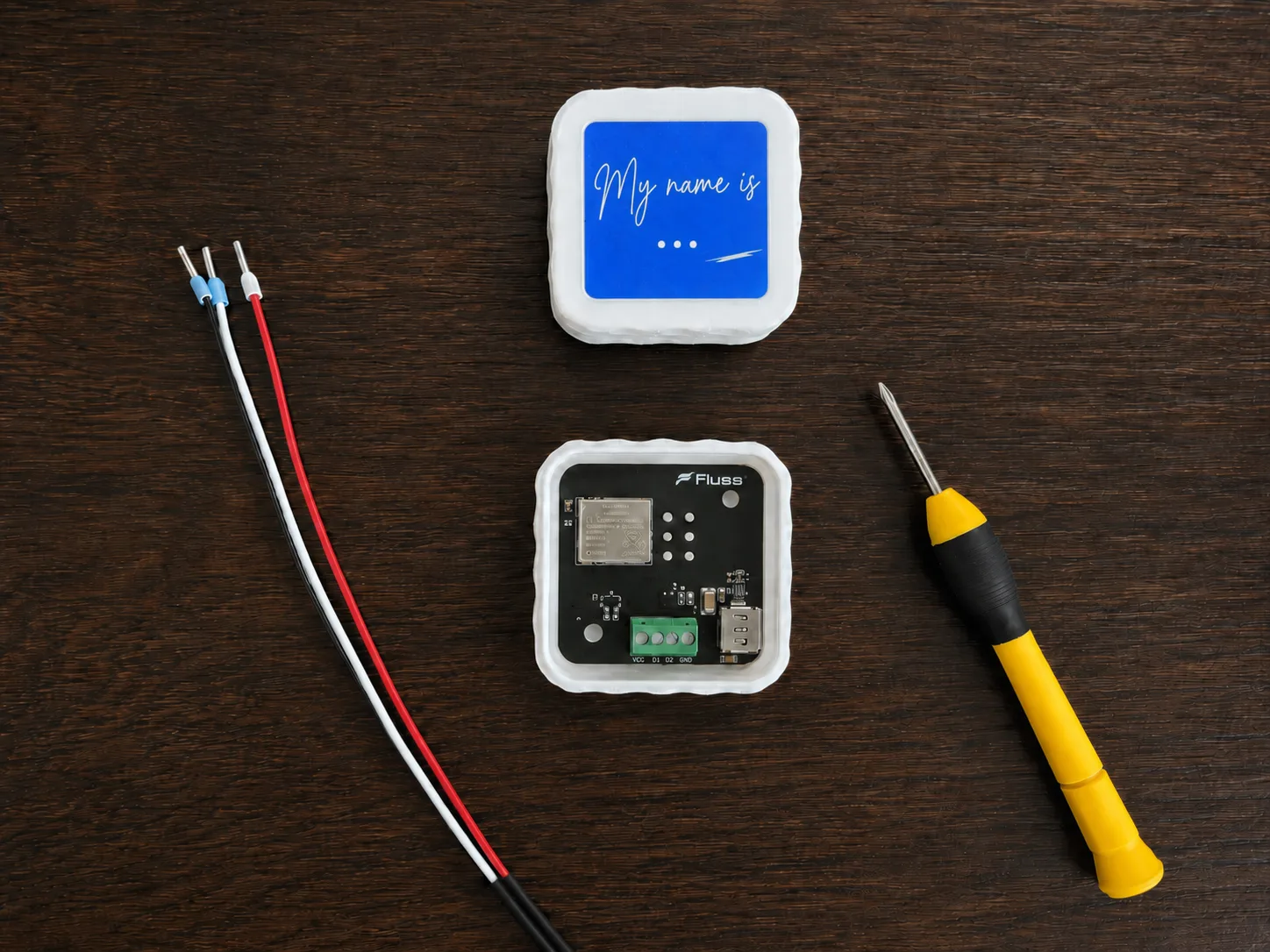
Every connected product starts the same way: a problem worth solving and a hunch that a small, smart device could solve it. Getting from that hunch to thousands of units in the field is where most projects stall. This guide walks through the path we take at Fluss — the same one behind the products in our case studies.
1. Start with the job, not the hardware
The most expensive mistake in IoT is choosing components before you understand the job. Before any schematic exists, get specific about what the device must sense or control, how often, how accurately, and under what conditions. A sensor that needs to survive outdoors for five years on a single battery is a completely different product from one that lives indoors on mains power — even if they measure the same thing.
Write down the constraints that actually matter:
- Environment — indoor, outdoor, submerged, high-vibration, extreme temperature?
- Power budget — battery, solar, or wired? How long between services?
- Connectivity — is there Wi‑Fi on site, or do you need cellular or LoRa?
- Volume — tens, thousands, or millions of units? This changes everything downstream.
2. Prototype the riskiest assumption first
Resist the urge to build the whole thing. Find the single assumption most likely to sink the project and prove or kill it with the cheapest possible build. If the hard part is squeezing two years out of a coin cell, breadboard the power path and measure it before you design a polished enclosure. De-risking in the right order is what keeps a project from quietly becoming a money pit.
3. Choose connectivity deliberately
Connectivity drives cost, battery life, and where the product can be deployed. Wi‑Fi is cheap and fast but assumes infrastructure and credentials. Cellular goes anywhere but adds module cost and a recurring data line. LoRa sips power over long range but moves only small payloads. There is no universally correct answer — only the right trade-off for your job and volume.
The hardware decision you can't easily reverse after manufacturing is connectivity. Get it right early.
4. Design firmware for the field, not the bench
Code that works on your desk and code that survives three years in a field cabinet are different disciplines. Real deployments need over-the-air updates, watchdogs, graceful handling of flaky networks, and sensible behaviour when the backend is unreachable. Build these in from the first firmware commit; retrofitting them after units ship is painful and sometimes impossible.
5. Treat the enclosure as part of the product
The enclosure is not packaging — it's the part of the product your customer actually touches, and it determines ingress protection, antenna performance, thermal behaviour, and how quick installation is. An IP67 housing and a clean mounting story can matter more to adoption than any feature on the PCB.
6. Plan the cloud and the data model early
A device is only as useful as what you do with its data. Decide early how readings are ingested, stored, alerted on, and surfaced to users. The data model you choose now shapes every dashboard, alert, and integration later — and it's far cheaper to change in a design doc than in production.
From idea to shipped
Done in the right order, the path from idea to production is methodical rather than mysterious: scope the job, de-risk the hard part, choose connectivity deliberately, harden the firmware, respect the enclosure, and design the data model up front. That's the approach behind every product we ship.
If you have an idea you'd like to pressure-test, the fastest way to start is our IoT Builder — describe what you want to build and get an instant estimate.